fredag 21 juli 2017

The majestic Angkor Wat


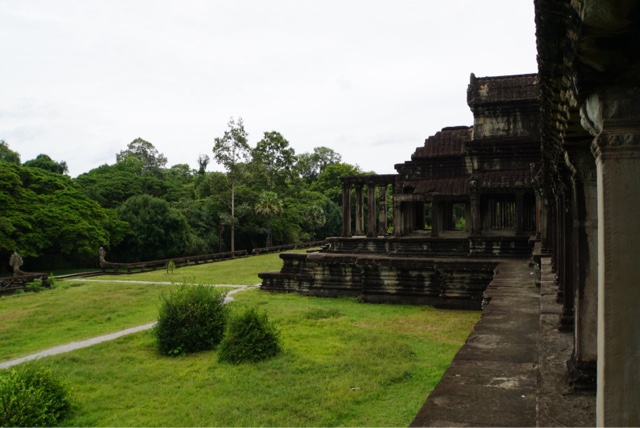
I onsdags besökte jag templet Angkor Wat. Fotonörd som jag är ville jag vara på plats tidigt och fått höra att templet öppnar vid åtta på morgonen. Dessutom är det flera grader svalare på morgonen och tidiga förmiddagen, vilket innebär att man kan vandra runt i lugnare takt men längre och därmed hinna se och uppleva mer. Jag, Carl - tillika fotonörd och dessutom den ende på denna resa med en riktig systemkamera - och Pontus åkte från vårt hotell i Siem Reap omkring halv åtta på morgonen. När vi kom fram var det redan en hel del människor där och jag fick veta att templet öppnar redan omkring kl 6 på morgonen. Därmed var det svårt att få bilder utan att andra turister fastnade på fotona men jag gjorde mitt bästa! Nedan ser ni resultatet (en del av bilderna är Called, de med mig är tagna av Calle eller Pontus). 
Det kändes riktigt, riktigt mäktigt att vandra runt i detta tempelområde. Idag är givietvis endast stenen kvar men jag försökte föreställa mig hur det såg ut i svunna tider, under dess glansdagar, med inredning och alla dåtida människor. 


// This past Wednesday I visited the temple of Angkor Wat. Being quite the amateur photographer I myself wanted to get an early start and had heard the temple area openes at eight o'clock in the morning. Me, Pontus and my brother Carl (an amateur photographer enthusiast like myself) took a tuktuk from Hotel Des Elefhantés at 07:30 in the morning. It's several degrees cooler in the morning and early on in the day, meaning not as sweaty and that you may walk around in a slow pace but still during a longer time without getting completely soaked. 
It turned out the temple area opened already around six o'clock in the morning meaning it was quite a lot of people at the sight already upon our arrival. Hence, it was hard getting photos without any other tourists accidentially photobombing  but we tried out best. Belowe is the result. 
It felt quite powerful wandering around these stone chaimbers and up to the high towers. I tried to imagine what it would have looked like back in it's heydays, with all the furniture, decorations and local residents wandering the halls of this majestic temple area. 


torsdag 20 juli 2017

At Artisan Angkor Silkfarm


I onsdags tog vi en tuktuk från hotellet och åkte ut till en lokal silkesfarm, en fabrik där man tillverkar silke och silkeskläder från grunden. 
Silkesmaskarna föds upp på löv från mullbärsträdet. Det är silkesmaskarna som spinner själva tråden som används i silket, detta gör dom när dom spinner sin puppa. Den naturliga färgen på silke i Kambodja är guldfärg. Den naturliga färgen är olika beroende på var i världen man befinner sig; temperatur, klimat, vad silkesmaskarna får att äta etc. 
Tråden som utvinns från en enda puppa är 400 meter (!) lång. Puppans utsida är det som blir råsilke medan insidan är spunnen i finare tråd och därmed utvinns fint silke ur puppans insida. Man kokar puppan (efter att fjärilen, den f.d. silkeslarven, har kläckts och lämnat puppan såklart) för att lösa upp den så att tråden kan spinnas upp på en rulle.
Silkestråden kan färgas, antingen av naturliga råvaror, av exempelvis curry eller bark; tråden kan också färgas av kemiska substanser och blandningen är då 20% naturlig råvara och 80% kemisk substans.  
På Artisan Angkor har man ca 1300 anställda inom företaget, all produktion och alla arbetsplatser är belägna i Kambodja. Man har valt att fortsätta arbeta manuellt trots att det idag finns maskiner som kan göra jobbet och dessutom på kortare tid. Anledningen till detta är att man vill tillhandahålla arbeten till folket. Företaget riktar in sig på att rekrytera människor utan arbete eller inkomst och deras huvudmål är att utbilda inom handkraftverk, bland annat silkestillverkningen. Utbildningen ges gratis och när lärlingen är klar och kommit i arbete inom företaget så är det upp till den nyutbildade att välja om denne vill arbeta kvar på företaget eller inte. Enligt vår guide är det en hel del som väljer att starta egen verksamhet.
Jag är så glad att vi åkte ut till denna silkesfarm och såg hela förloppet: från plockandet av löv från mullbärsträden till de små larverna, de lite större larverna, hela produktionen steg för steg till färdig produkt! 


// On Wednesday we took a tuktuk and went on an excursion to a local silkfarm. At Artisan Angkor the silkfactory they breed silkworms which in turn product the thread of silk. 
The silkworms eat leaves from the mulberry tree. The natural colour of the Cambodian silk is golden. The natural silk colours vary from country to country, depending on where in the world the country is, it's climate and what the silkworms are fed.
The thread is extracted from the cocoon the silkworms make. One cocoon makes a 400 meter (!) long thread. The outside of the cocoon is rawsilk while the inside of the cocoon is the thinner, fine silk. 
After the butterfly (former silkworm) has left the cocoon, the cocoon is boiled in hot water to make it possible to extract the thread. The thread is then rolled up on a spole. 
The silkthread can be dyed to change it's golden natural color and there are two ways of doing it: one, with natural ingredients such as curry or bark from a tree; two, with different kinds of chemicals. The mixture used in chemical dyed silkthred is made up by 20% natural ingredients and 80% chemicals. 
At the silkfarm of Artisan Angkor there are 1300 employees. The whole production is placed in Cambodia. The decision was made to continue doing everything in production by hand rather than by machine, although there are machines able to do the same work done by hand, and much faster than done by hand too. The reason behind this decision is that the company wants to provide working opportunities for the Cambodian people. They offer a free education within the craft, for people who live in poor conditions and don't have any money. After this education is done, it's up to the newly examinated worker to decide whether he or she wishes to stay within the company or not. According to our tour guide it's not uncommon that some choose to start their own business after a while. 
I am so happy we dicided on doing this tour. It was pretty awesome to see it all - from the mulberry trees providing the food, to the little worms, the bigger worms and all through production to finished product!